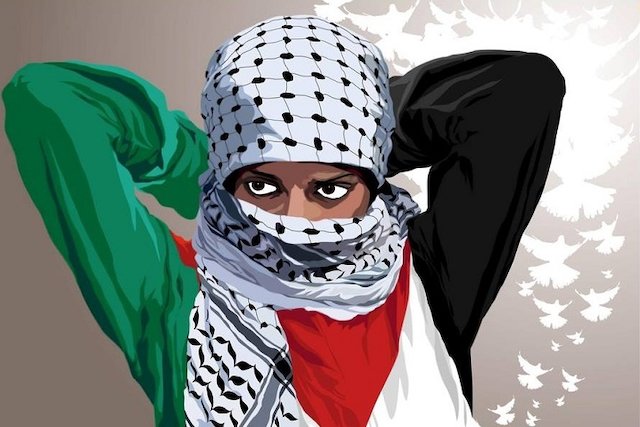
It’s been almost a year since October 7th, and Israel is still viciously bombing Palestine. Yet many people talk about this as if a “war” suddenly started last year, as if violence appeared out of nowhere. It didn’t.
What we’re seeing now didn’t begin in 2023. It traces back over a century, to the early 1900s, when the Ottoman Empire collapsed and Britain took control of Palestine. Before that shift, Palestine was largely peaceful. Muslims, Christians, and Jews lived on the land together without the kind of mass violence we see today.
In 1917, the Balfour Declaration set this in motion. What followed were decades of Palestinians being pushed off their land, losing their homes, and living under growing military control. In 1948, this escalated into the Nakba, when more than 700,000 Palestinians were forcibly expelled from their homes and a lot of them were killed.
There was no real peace after that. What came instead was occupation, blockade, and repeated assaults that get labeled as “wars,” but function more like pressure releases in a system built to keep one group permanently under control.
I no longer trust the narrative the news peddles out, not because I think “nothing is real,” but because I’ve watched how selectively reality is framed.
What gets amplified.
What gets buried.
Whose suffering becomes a headline, and whose becomes a statistic.
Once you notice that pattern, it becomes impossible to unsee, especially when you look at what’s happening in Palestine.
There is a genocide unfolding, and yet much of the mainstream coverage continues to frame Israel as the “good guys.” The suffering is minimized, contextualized away, or reframed until the violence becomes abstract and the victims become numbers.
Language does the work. “Conflict” replaces occupation. “War” replaces Genocide. “Defense” replaces domination. Civilian deaths are mourned selectively.
What’s jarring to me is how easily people accept this framing.
We can watch a film like The Hunger Games and instinctively side with the oppressed. We recognize the cruelty of surveillance, starvation, collective punishment, and control when it’s fictional. We understand why resistance emerges when people are trapped, stripped of dignity, and denied basic survival.
But when those same dynamics exist in real life, suddenly resistance is labeled a crime.
Context disappears. History gets shortened. Power imbalances are ignored. The oppressor is granted nuance. The oppressed are denied humanity.
I’ve also learned that media doesn’t exist to inform, it exists to shape. To simplify complex realities into digestible angles. To keep people emotionally charged, divided, and loyal to a version of events that benefits someone, usually not the people on the ground.
That doesn’t mean everything reported is false.
It means it’s incomplete.
And incompleteness, when repeated enough, becomes distortion.
Standing with the oppressed requires more than reposting what’s trending. It requires slowing down. Questioning. Listening to people who live the reality, not just commentators who profit from narrating it.
It means being willing to sit with discomfort, especially when the truth doesn’t align neatly with the “good side vs bad side” framework we’ve been trained to accept.
I’ve had to confront my own blind spots too. I hate to admit this, but there was a time when I didn’t care much about politics or what was happening beyond my immediate world. Before I was Muslim, I lived in a kind of insulation.
That mindset is incredibly common, especially in major cities, where proximity to everything somehow makes you feel responsible for nothing. When suffering is distant, abstract, or filtered through screens, it’s easy to consume headlines passively and mistake awareness for understanding.
Ignorance doesn’t always look like hatred. Sometimes it looks like comfort. Sometimes it looks like distraction. Sometimes it looks like believing what you’re shown because it doesn’t cost you anything to do so.
What changed me wasn’t a single event. It was pattern recognition.
Watching the same tactics repeat.
Watching empathy be rationed.
Watching language soften violence and harden hearts.
Standing with the oppressed, to me, means refusing to outsource my conscience to institutions whose incentives are not aligned with truth or care. It means acknowledging that violence doesn’t appear out of nowhere. That desperation is manufactured. That resistance is not born in a vacuum.
 Honestly, Vanessa
Leave a comment