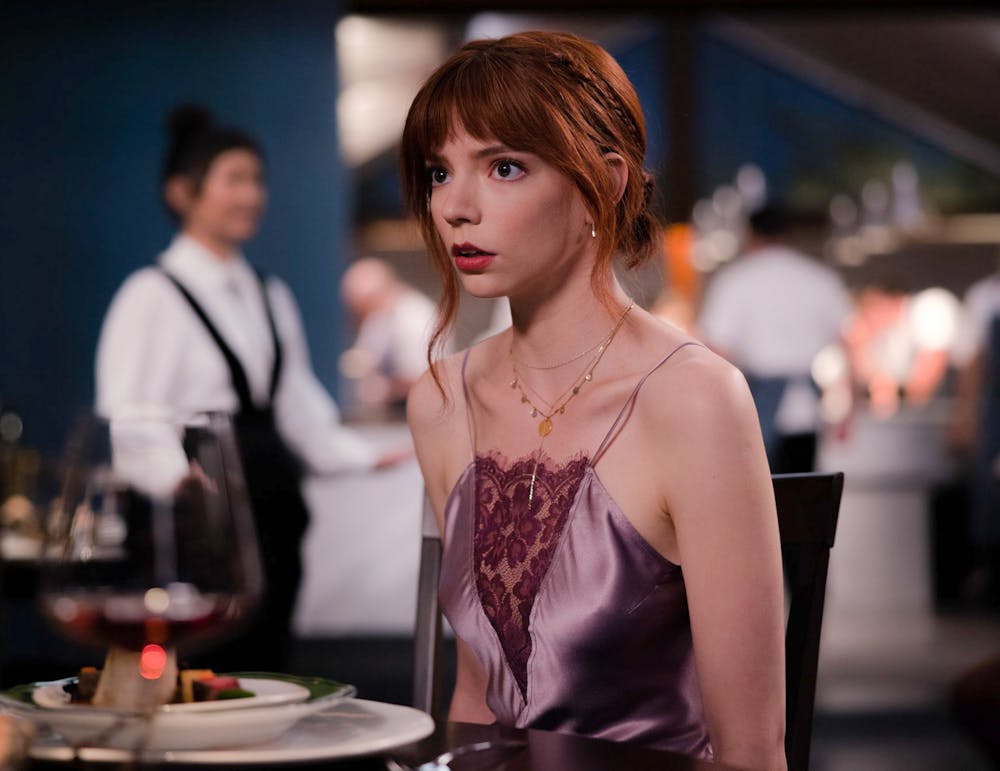
I did not expect to love The Menu as much as I did. It is so unhinged, hilarious and honestly kind of cathartic.
This is not a food movie. It’s a movie about power, entitlement, and the absurdity of people who confuse taste with worth. I thought it was so clever and dark.
At the center is Chef Slowik, a man who has turned culinary perfection into his entire world. His island. His rules. His menu. Every movement is choreographed, every plate a performance. The guests aren’t customers, they’re participants in something they don’t fully understand until it’s too late.
And that’s the joke.
The people invited to this dinner represent everything that drains creativity dry. The critics who consume art without respect. The wealthy patrons who treat labor like an experience. The influencers who want proximity to genius without effort. The people who think being able to afford something means they deserve it.
Each course peels back another layer of entitlement, and each reveal gets more absurd, more brutal, and somehow funnier.
What makes the film work is how committed it is to the bit.
Chef Slowik isn’t just angry. He’s exhausted. Burned out. Hollowed out by people who took and took and took until nothing was left but perfection without joy. His rage feels theatrical, but it also feels earned. This is what happens when art becomes a product and the artist becomes invisible.
And then there’s Margot who was a breath of fresh air for him.
She doesn’t belong there, and that’s exactly why she survives.
Margot is the character that made the whole film click for me, because she reminds me a lot of myself. She’s observant. Detached. Not easily impressed. She doesn’t buy into the performance just because everyone else is nodding along. She asks the uncomfortable questions. She notices what doesn’t make sense.
She isn’t chasing status, belonging, or approval. She’s just trying to stay grounded in reality while everyone around her is intoxicated by exclusivity. And that refusal to participate, to perform reverence, to pretend something is profound just because it’s expensive or curated, is exactly what saves her.
She survives because she sees through the illusion.
And that refusal to play along is everything.
The humor in The Menu is vicious. It laughs at the rich without glamorizing them. It mocks pretension without turning itself into it. It’s self-aware without being smug. The violence is stylized, the absurdity cranked just high enough to keep you laughing even when you probably shouldn’t be.
And that’s what makes it so fun.
Underneath the madness, The Menu is about control, about who gets to decide what has value and who gets punished for wanting more than they deserve. It’s about art being strangled by consumption. About creativity dying under expectation.
But it never lectures you.
It just serves the course and watches you react.
By the end, The Menu feels less like a horror film and more like a release. A dark fantasy where entitlement finally meets consequences.
I laughed. I cringed. I enjoyed myself far more than I expected to.
And honestly?
That might be the most dangerous thing about it.
 Honestly, Vanessa