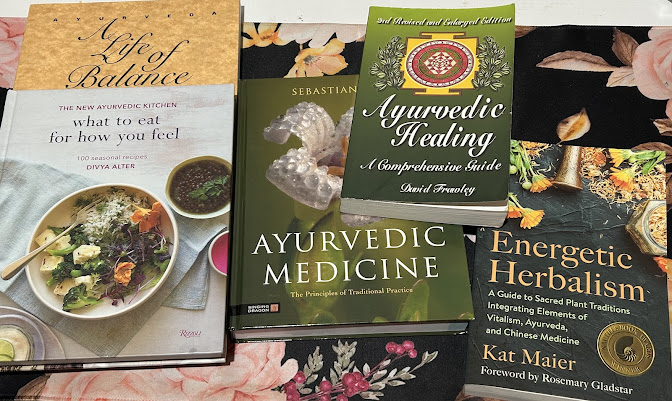

This is a question I get often. And the short answer is yes, they can coexist, as long as Ayurveda is approached as a health framework, not a belief system.
Ayurveda, at its core, is not a religion. It doesn’t ask for worship, devotion, or spiritual allegiance. It’s an observational system, one that looks at how the body responds to food, sleep, seasons, stress, and routine. It’s about cause and effect, heat and cold, nourishment and depletion, rhythm and imbalance.
In that way, it’s not very different from how Islam already encourages us to live.
Islam places a strong emphasis on balance, moderation, routine, cleanliness, and care for the body as an amanah, a trust. There are rhythms built into daily life, prayer times, fasting, waking early, eating with intention, resting at night. None of this is foreign to Ayurvedic thinking.
Where people understandably get uncomfortable is when Ayurveda is packaged with spiritual language, deities, mantras, or metaphysical beliefs that don’t align with Islamic faith. And that discomfort is valid. Those elements are cultural and religious layers, not the medicine itself.
The same applies to yoga.
Muslims can still practice yoga as a form of physical movement, stretching, breath awareness, and nervous system regulation. There is nothing inherently problematic about mindful movement or caring for the body. What Muslims would avoid is engaging in spiritual rituals, chanting mantras, invoking deities, or treating the practice as a form of worship or spiritual attainment.
In other words, movement is fine.
Stretching is fine.
Breath awareness is fine.
What’s avoided is spiritual syncretism.
You don’t need to accept reincarnation to notice that eating late affects sleep.
You don’t need to believe in chakras to observe that chronic stress affects digestion.
You don’t need to adopt another worldview to recognize that routine stabilizes the nervous system.
Using Ayurveda in a Muslim life means filtering. Taking what is practical, observable, and beneficial, and leaving what doesn’t align with your aqeedah. Just like Muslims have historically done with Greek medicine, Persian medicine, and other traditional medical systems.
Islam does not require us to reject wisdom because of where it originated. It asks us to be discerning.
For me, Ayurveda has helped me understand my body, not replace my faith. It gives language to patterns I already experience. It supports routine, discipline, and nervous system regulation, all things that make my religious life more sustainable, not less.
Faith guides my purpose.
Medicine supports my vessel.
As long as that line is clear, there is no contradiction.
Compatibility isn’t about origins.
It’s about intention, boundaries, and clarity.
And when those are intact, the body can be cared for without compromising the soul.
 Honestly, Vanessa