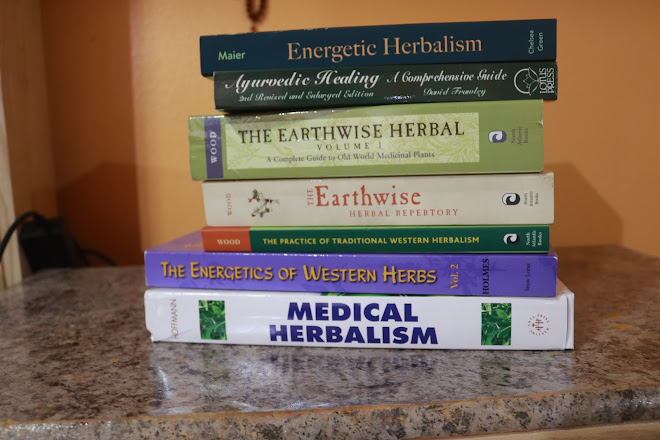
If you want to get into learning true holistic herbal medicine and feel overwhelmed by the laundry lists of herbs, what’s it good for gargon, and Latin names, you’re not alone. Along the way, I’ve noticed that a lot of popular herbal books give you information, but very little understanding.
True herbal medicine isn’t about matching a symptom to an herb. It’s about understanding terrain, the internal environment of the body, and how herbs interact with patterns like heat, cold, dryness, stagnation, laxity, and tension.
I’m going to recommend five herbal books that will actually teach you how to truly think holistically and goes beyond surface level thinking when its comes to herbs.
1. The Practice of Traditional Western Herbalism by Matthew Wood
If you only ever buy one serious herbal book, let it be this one. Matthew Wood doesn’t teach herbs as isolated remedies. He teaches them as relationships within terrain. You learn how constitution, tissue state, temperament, and symptom patterns all inform herb choice. This book trains your clinical intuition. It forces you to slow down and actually observe the body instead of chasing protocols. This book really stands out because it has a strong focus on tissue states and constitutional patterns and teaches pattern recognition instead of formulas which you don’t typically get this knowledge outside of a good herbal school. It’s very deep, traditional, and experience-based so this book is not a beginner “herbs for headaches” book, and that’s exactly why it’s so valuable.
2. The Earthwise Herbal (Volumes I & II) by Matthew Wood
These books pair beautifully with The Practice of Traditional Western Herbalism. Instead of listing herbs by action, Wood organizes them by physiological qualities and terrain suitability. You learn who an herb is for, not just what it does which a lot of superficial and popular herbal books tend to focus. Reading these books feels like being mentored by an old-school herbalist who actually watched people heal. These books really teach discernment instead of memorization so if you care about terrain, which you should if you are getting into herbal medicine, these books belong on your shelf.
3. Medical Herbalism by David Hoffmann
This is one of the few books that successfully bridges modern physiology and traditional herbal energetics. Hoffmann doesn’t ignore science, but he also doesn’t reduce herbs to isolated compounds like many scientists and researchers do. He constantly brings the conversation back to traditional systems, balance, and terrain. It’s especially helpful if you want to understand the why behind how herbs work without losing the bigger picture. So this book really offers a strong system based way of thinking which is lacking majorly in the holistic community. This book really grounds herbalism without stripping it of its soul.
4. Ayurvedic Healing by David Frawley
Even if you don’t practice Ayurveda formally, this book is invaluable for understanding terrain as a living ecosystem. Ayurveda excels at pattern recognition, especially when it comes to digestion, metabolism, tissues, and elimination. Frawley explains how imbalance develops over time, not overnight. You’ll start seeing familiar terrain patterns everywhere once you read this book. David offers clear explanations of systematic imbalances, strong terrain-based frameworks and teaches progression of disease instead of isolated symptoms. This book will develop help you think in patterns, not diagnoses.
5. Energetics of Western Herbs by Peter Holmes
This is a more technical book, but incredibly useful if you want precision. Holmes applies energetic principles to Western herbs with depth and clarity. It’s less poetic than Matthew Wood which I really highly appreciate, but it’s very sharp when it comes to terrain assessment and matching herbs to constitutional states. This book gives very detailed energetic profiling of herbs, a strong emphasis on constitutional and terrain matching and really helps to improve refinement of clinical judgment. After reading it, It helped me to stop guessing and start choosing herbs intentionally.
Most people get stuck at the surface of herbal medicine because they never learn the how. These books I mentioned above will teach you how to observe patterns, respect individuality, and understand healing as a process, not a hack.
If you’re serious about herbal medicine, terrain isn’t optional. It’s the foundation.
And these five books actually teach it.
When herbalism is taught without terrain, people end up confused, frustrated, and constantly switching remedies without understanding why nothing truly sticks. Here are some honorable mentions that tend to create superficial understanding when it comes to herbal medicine.
1. Any “Herbs for Every Ailment” Style Books
These books usually organize herbs like this:
Headache → peppermint
Anxiety → chamomile
Digestion → ginger
At first, this feels helpful. Over time, it becomes a dead end. Just trust me on this. I’ve been there when I was first starting out. But what I didn’t know that was the same symptom can come from different types of terrain patterns. When terrain is ignored, people start wondering why the “right” herb worked for someone else but made them feel worse. This encourages trial and error frustrating type of process instead of real understanding.
Examples: The Complete Medicinal Herbal by Penelope Ody, The Herbal Medicine-Maker’s Handbook by James Green, The New Holistic Herbal by David Hoffmann, Herbs for Common Ailments by various authors, The Essential Guide to Herbal Safety by Simon Mills.
2. Pretty Coffee-Table Herbal Books
These are the ones with beautiful photos, aesthetic layouts, and short inspirational blurbs about plants. They’re lovely to look at. They’re calming. They’re also not educational in any meaningful way. You may finish the book feeling inspired, but still unable to confidently choose herbs for yourself or anyone else. Actually my very first book was a pretty coffee table herbal book lol They give little to no explanation of the why an herb is used or physiology or terrain.
Examples: Alchemy of Herbs by Rosalee de la Forêt, The Wild Remedy by Emma Mitchell, Plant Magic by Lindsay Squire, The Green Witch by Arin Murphy-Hiscock, The Herbal Apothecary by JJ Pursell.
3. Books That Reduce Herbs to Active Compounds
Some modern herbal books try so hard to sound scientific that they strip herbs of context entirely. They treat herbs like drugs instead of ecosystem tools. When herbs are explained only through isolated constituents, people lose sight of how plants interact with living systems. This leads to supplement-style thinking, not herbal thinking. Science matters, but without terrain, it’s incomplete.
Examples: Herbal Drugs and Phytopharmaceuticals by Max Wichtl, Pharmacognosy by Trease & Evans, Herbal Medicine: Biomolecular and Clinical Aspects by Benzie & Wachtel-Galor, Herbs and Natural Supplements by Lesley Braun & Marc Cohen.
4. Beginner Books In General That Never Let You Graduate
There are many beginner herbal books that are genuinely helpful, for about six months. The issue is that some people stay stuck there for years because the books never introduce deeper frameworks like tissue states, energetics, or pattern progression. You keep learning more herbs, but not more understanding. There’s no pathway from beginner to intermediate thinking, it repeats the same surface concepts and creates on lists instead of discernment.
Examples: The Complete Beginner’s Guide to Herbal Medicine by Wendy Vincent, Herbal Medicine for Beginners by Katja Swift & Ryn Midura, Backyard Medicine by Julie Bruton-Seal & Matthew Seal, Beginner’s Guide to Medicinal Herbs by Rosemary Gladstar, The Herbal Healing Handbook by Guido Masé
5. Trend-Driven Herbal Books
These books chase whatever is popular at the moment, adaptogens, detoxes, gut resets, hormone hacks. They promise universal solutions for complex bodies. When trends fade or stop working, people are left confused, wondering why herbal medicine feels inconsistent. These books give you a one-size-fits-all mentality, little to no respect for individuality and encourages yet again cycling through remedies playing a guessing game.
Examples: Adaptogens by David Winston & Steven Maimes, The Hormone Reset Diet by Sara Gottfried, The Autoimmune Solution by Amy Myers, The Plant-Based Diet for Beginners by Gabriel Miller, Eat to Beat Disease by William Li
When terrain is ignored, people often experience herbs that work one week and fail the next, increased sensitivity or side effects, conflicting advice that all sounds “right” and a sense that herbal medicine is vague or unreliable. I’ve been there and it almost drove me away from herbal medicine entirely. In reality, the problem isn’t the plants. It’s just the missing the proper framework.
When you learn real herbal education and terrain, suddenly herbs make sense again, fewer plants and supplements are needed, chosen more carefully, healing feels steadier and more predictable and confidence replaces confusion.
That’s the difference between collecting information and developing wisdom.
 Honestly, Vanessa