My best friend had bought me a 23andMe DNA kit for my 27th birthday and and honestly… it was wild seeing my genetic story laid out in charts, colors, and timelines. I always knew I was mixed, but seeing the exact regions and generations mapped out felt like opening a time capsule of everyone who came before me.
According to 23andMe, I am quite literally a blend of almost every major population in the Atlantic world. My DNA is mostly West African & Central African, European (Northwestern, French & German, British & Irish, Southern European, Spanish & Portuguese, Greek & Balkan), Indigenous American, A small amount of North African and Trace Asian (Manchurian & Mongolian + Central/South Asian). This kind of genetic mixture is extremely common in the Caribbean, which 23andMe correctly flagged as my most recent ancestry in the Americas.
The major portion of my lineage is African and the results show ancestry from: Nigerian, Congolese, Ghanaian, Liberian & Sierra Leonean, Senegambian & Guinean, African Hunter-Gatherer, Southern East African and Sudanese. These lineages typically appear in people of Caribbean Creole descent because of the transatlantic slave trade, where people from multiple West & Central African regions were displaced and mixed together. 23andMe’s timeline suggests these African ancestors were recent enough to appear in the 3–7 generation range, meaning they were alive between the late 1700s to the late 1800s.
The remainder of my lineage is European which was surprisingly diverse from Northwestern European, French & German, British & Irish, Broadly European, Spanish & Portuguese, Greek & Balkan, Broadly Southern European and Eastern European. This exactly matches Caribbean and Louisiana Creole patterns which are French, Spanish, Portuguese, and British influence, mixed with African ancestry. My timeline shows these lines appear 5–8+ generations back, which means your European ancestors are mostly from the 1700s and earlier.
There was a small but real amount of Indigenous American DNA that appeared in my results.
This is also extremely common in Caribbean ancestry, where Indigenous Taíno, Carib, and Arawak peoples mixed with African and European populations.
Timeline: 6–8+ generations back, which again places these ancestors around the 1700s.
There was a tiny percentage which is still significant because North African and Arabian ancestry often enters Caribbean DNA through: Moorish influence in Spain and Portugal, Ottoman-era migrations and Colonial mixing before Europeans came to the Caribbean. My timeline places this around 7–8+ generations ago, which is consistent with the Iberian (Spanish/Portuguese) line mixing long before the Americas.
Two tiny but interesting regions: Manchurian & Mongolian (0.2%) and Broadly Central & South Asian (0.1%). These kinds of trace signals often appear because Ancient migrations through Eurasia, Small contributions from colonizers or sailors and very old gene flow that becomes diluted over centuries. This is tiny, but they still represent real ancient ancestry far back in my genetic tree which is so interesting and crazy to see.
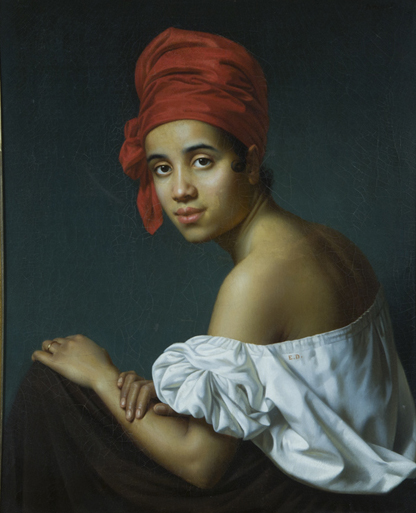
My mixed ancestry began forming very early in the Caribbean around the 1500’s, during the colonial era. This is exactly what historical Creole ancestry looks like: French + Spanish + African + Indigenous + tiny amounts of various European lineages.
Before Europeans and Africans arrived, the Caribbean was home to Indigenous Caribbean peoples with their own cultures, languages, kingdoms, and inter-island trade networks.
Most Caribbean islands were majority Taíno before colonization. and they lived in Cuba, Jamaica, Hispaniola (Haiti & the DR), Puerto Rico, the Bahamas, and parts of the Lesser Antilles. This is classic Caribbean Creole ancestry, meaning that my ancestors are a mix of Indigenous Taino caribbean women, Enslaved Africans from West & Central Africa, French, Spanish, Portuguese, and British men (colonial settlers).
Unfortunately, there was a genocide of the Taino Caribbean Indigenous Peoples😔 When Christopher Columbus arrived (horrible man), he implemented forced labor systems (the encomienda), where Indigenous people were required to mine gold or work on plantations.
There was direct violence and enslavement such as mass killings, limb amputations, executions for disobedience, rape and sexual slavery and Forced labor that led to widespread starvation and exhaustion. So much trauma and hardship. There were no phones to capture this, but the Spanish who perpetrated this documented the whole thing themselves via writing.
Indigenous peoples had no immunity, and mortality rates were catastrophic when the European brought over their european diseases like smallpox, measles, influenza. In some areas, up to 90% of the Indigenous population died within a century.
Beyond physical death, colonization brought destruction of language, loss of ancestral religions, forced conversion to Catholicism, banning of spiritual practices, and displacement from ancestral homelands. It also resulted in the loss of herbal medicine knowledge because their language was gradually replaced. Same thing that’s happening in Palestine today. This is recognized as cultural genocide.
Seeing my DNA results wasn’t just interesting, it was heartbreaking.
It made me realize that I carry the story of people who didn’t choose their paths. My ancestry isn’t a simple mix; it’s a map of survival, displacement, erasure, and forced blending. I am the product of histories that were violent, painful, and full of loss.
My African ancestors didn’t come to the Caribbean by choice; they were taken. My Indigenous ancestors didn’t disappear, they were killed, erased, pushed out of their own lands.
My European ancestry wasn’t romantic either, it came through colonization, invasion, and systems built on domination.
It’s strange seeing all of that in percentages.
It’s strange knowing your existence is built on so much collective suffering.
There is something sad about realizing how much of my gene pool was shaped by genocide, slavery, forced conversion, cultural destruction, and the collapse of whole nations and tribes. These weren’t “mixings”, they were collisions. They were wounds. They were people losing everything, being reshaped against their will.
It makes me feel connected and guilty at the same time like I’m standing in the middle of a thousand ghosts who endured unimaginable things so I could even exist.
 Honestly, Vanessa