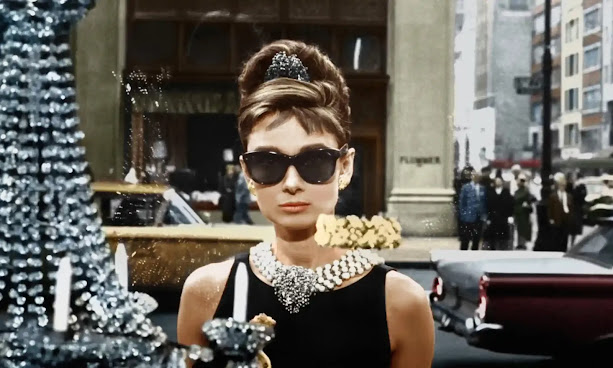
A lot of us idolized Holly before we understood her.
When you’re younger, she looks like freedom. No rules. No roots. Beautiful, desired, unattached. She answers to no one. She floats through life on her own terms. That kind of woman feels powerful when you’re still learning how painful attachment can be.
But idolizing her is usually a mirror, not admiration.
It often means you recognized something familiar in her coping. The way she stays light to avoid sinking. The way she keeps moving so nothing can catch her. The way she turns charm into a buffer between herself and the world.
Holly is aspirational when you’re trying to survive.
The follows Holly Golightly, a young woman in New York who has reinvented herself after a painful, traumatic and unstable past. It’s a film about a woman who is desperately trying not to belong to anyone, including herself. She uses charm, beauty, humor, and social performance to stay untethered. She avoids deep attachment because closeness threatens the fragile sense of control she’s built.
Holly Golightly isn’t whimsical. She’s fragmented. She wanders because standing still would mean feeling things she doesn’t have language for yet. The glamour is just a cover up. The parties are noise to fill in the hole that fills empty. The accent, the laugh, the carefully curated chaos, all of it is performance.
Paul, the writer who moves in upstairs, doesn’t rescue her. He exposes the cracks in her emotional armor. Their relationship forces Holly to confront the cost of never belonging, including never giving her cat a name because she fears attachment.
The film explores how people construct identities to escape pain, how femininity can become both currency and camouflage, and how freedom can quietly turn into isolation. The ending remains unresolved because real emotional patterns don’t dissolve neatly.
Holly doesn’t want love, not really. She wants containment. She wants a life where nothing gets too close, because closeness means exposure, and exposure means pain.
People often miss that message as they’re often distracted by all of the superficial things in the film.
Most people will frame her as carefree when she’s actually hyper-controlled. They call her free-spirited when she’s emotionally evasive. She’s not afraid of commitment because she’s shallow. She’s afraid because she knows what it costs to need someone.
That scene with Cat, the rain, the breakdown, that’s not romantic catharsis. That’s grief. That’s a woman finally cracking under the weight of pretending she doesn’t care.
Cat isn’t just a cat. Cat is every attachment she refuses to name because naming makes it real, and real things can leave.
Paul doesn’t “save” her. He doesn’t fix her. He simply mirrors her back to herself, and that’s terrifying. Because once someone sees you clearly, you can’t keep pretending you’re just passing through.
The ending isn’t clean. It isn’t neat. It’s unresolved on purpose.
Because people like Holly don’t magically heal in the rain. They don’t transform because of one speech or one kiss. They take their survival mechanisms with them, even into love.
And that’s what makes the film honest.
Breakfast at Tiffany’s isn’t about romance. It’s about a woman negotiating safety in a world that taught her to trade intimacy for survival. It’s about how femininity can be both a weapon and a shield. About how beauty can buy distance. About how charm can keep people close enough to admire you, but far enough to never really know you.
Holly Golightly isn’t iconic because she’s stylish.
She’s iconic because she’s familiar.
She’s every woman who learned early that being desirable was safer than being vulnerable. That being adored was easier than being understood. That drifting was better than staying long enough to be hurt.
And maybe that’s why the film still hits.
Because beneath the pearls and black dress is a truth we don’t like to admit:
Some of us aren’t looking for love.
We’re looking for somewhere that feels like Tiffany’s.
A place where the world feels quiet.
Where nothing bad can happen.
Where we don’t have to belong to anyone.
 Honestly, Vanessa